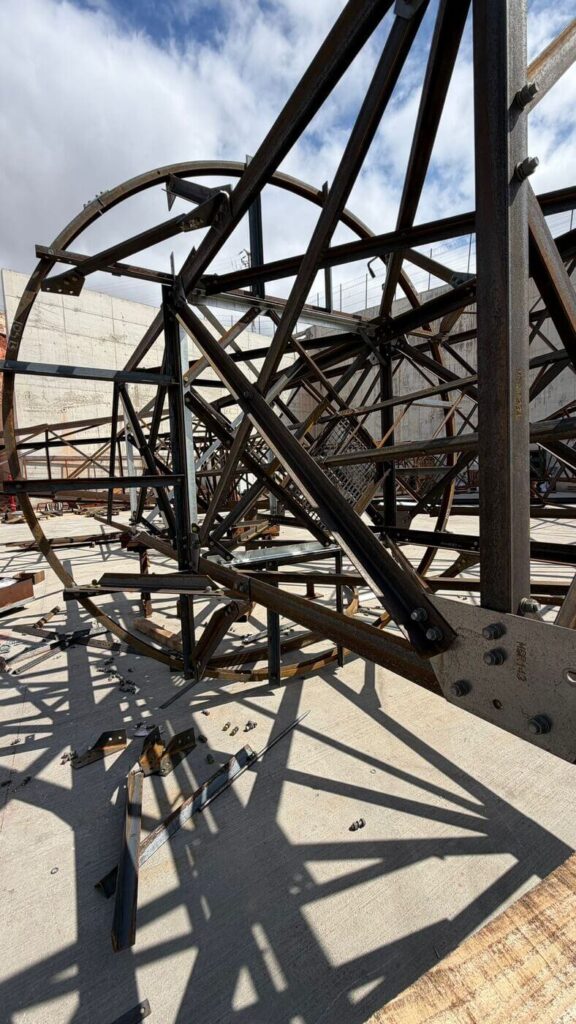

Quality Assurance & Quality Control for Telecom Towers: Built for Reliability
What is Quality Assurance (QA) in Tower Manufacturing?
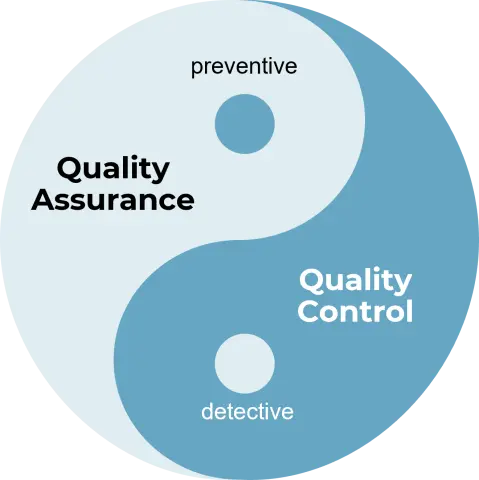
Quality Assurance (QA) is a proactive, process-driven approach designed to prevent defects before manufacturing even begins. It involves establishing strict operational standards, managing supplier certifications, and training personnel.
In telecom tower manufacturing, QA means verifying that the raw steel purchased (such as S235, S355, or DX51D) comes with proper mill test certificates.
Furthermore it is important to ensure that CNC machines are accurately calibrated, and confirming that the engineering design software perfectly aligns with the manufacturing floor.
What is Quality Control (QC) in Structural Steel?
Quality Control (QC) is the reactive, product-oriented side of quality management.
It focuses on identifying and correcting defects in the finished components. For structural steel, QC involves physical inspections and testing.
This includes checking the dimensions of cut profiles, verifying bolt-hole alignments, measuring the thickness of the zinc coating after hot-dip galvanization, and testing the tensile strength of fasteners.

Quality Control vs. Quality Assurance: What’s the Difference?
- Quality assurance (QA) is all about the process; its about getting the right things, right first time, is about preventing mistakes (through, say, the use of the ISO9001 management systems).
- Quality Control (QC) concerns the product. It is concerned with identifying and correcting errors in the product before it leaves the factory (e.g., judging by the width of a gusset plate with a pair of calipers).
MTS Tower Quality Procedures: Engineering Excellence
At MTS Tower, our Telecommunication tower QA/QC protocols are embedded into every layer of our operations. Our internal quality procedures include:
-
Raw Material Verification: 100% traceability of all steel batches using Mill Test Certificates (MTC).
-
CNC Precision Checking: Routine calibration of automated cutting and drilling machines to ensure zero tolerance for hole misalignment.
-
Coating Thickness Analysis: Digital measurement of hot-dip galvanization to ensure compliance with ISO 1461 and ASTM A153 standards (e.g., verifying G90/Z275 parameters).
Prototype Inspection
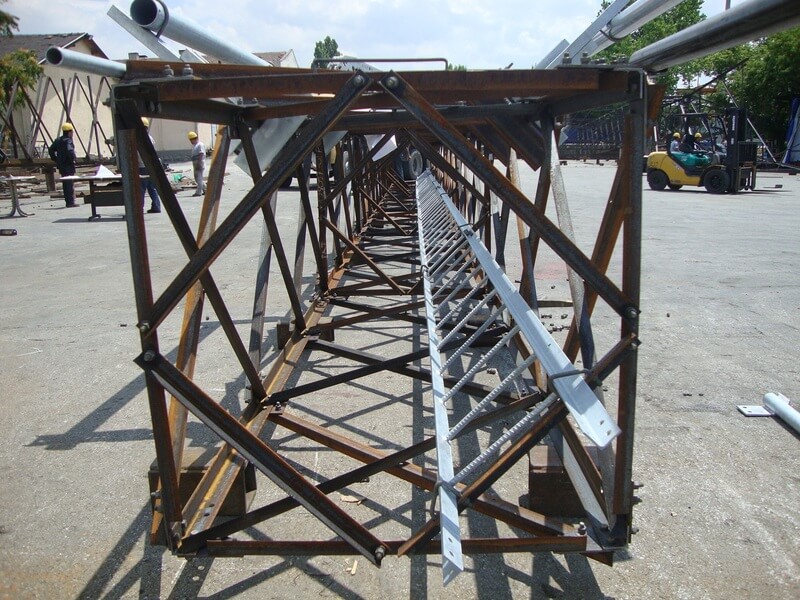
Prior to mass production on any new tower design, the MTS Tower must complete a Prototype Inspection. We build the very first set of parts physically in our facility before beginning to mass produce the parts.
The Importance of Prototype Assembly for Telecom Towers
- Zero Erection Delays: Ensure all bolt holes line up and no tension on connection plates.
- Erection Manual Accuracy: The prototype assembly is used to verify and complete the field crews assembly drawings, and installation drawings.
- Structural Strength: We verify that there are no clashes between cross-bracings, antenna mounts and climbing ladders.

Welding Inspection for Telecom Towers
While most modern telecom towers rely heavily on bolted connections, critical base plates, gussets, and flange connections require welding.
Our welding inspection telecom towers protocol ensures that every weld is performed by certified professionals.
We utilize Non-Destructive Testing (NDT) methods, including:
-
Visual Testing (VT): Checking for surface irregularities, proper weld size, and undercutting.
-
Ultrasonic Testing (UT) & Magnetic Particle Testing (MPT): Scanning critical structural welds to detect hidden internal micro-cracks or lack of fusion that could compromise the tower’s load-bearing capacity.
Tower Assembly Quality Check
Before the final product is approved for dispatch, our quality engineers perform a comprehensive Tower Assembly Quality Check.
This involves a final sweep of the manufactured batch to ensure that every individual steel member is correctly stamped with its unique identification number.
This part-marking must perfectly match the packing list and erection drawings, ensuring that field crews can easily identify parts during installation.
Packing Procedures for Galvanized Steel Towers
- Sea-Worthy Bundling: Steel profiles will be bundled by section (i.e., Leg Section 1, Bracing Section 2) with heavy-duty steel strapping.
- Protection of white rust: We use right woods space equally for each bundle to permit air circulation & there was no “white rust” formation on galvanizing surface. This is done during the long ocean transits.
- Accurate Hardware Delivery, Packaging & Computer Packaging: The pure hardware, including Bolts, nuts, washers and small tool accessories, is double-enclosed in a folded sealed plastic bag and well-packed in reinforced wood Boxes and label to avoid loss during transportation and site managing.